Your Cart is Empty



We know today that many Asian animals are in critical danger of extinction. The Panda and the Tiger are two of the best-known threatened species. Over time and events, the two animals have seen their populations decline dangerously.
That's why, today, Tiger-Universe looks at this subject, to explain the risks these two species face.

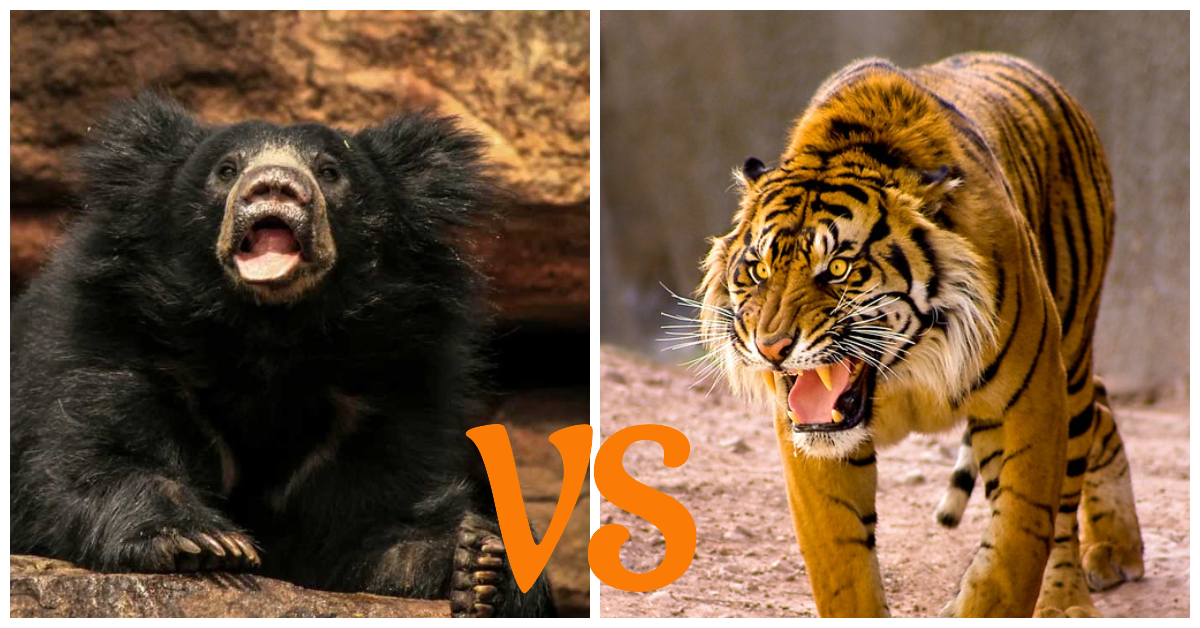
The first thing you notice when you see the two animals from China is that they look very different from each other. The panda is a big, clumsy bear with trouble moving, while the tiger is a brave hunter capable of running at more than 60 km/h. We can try to list the striking differences between them.
First of all, the Giant Panda is a bear; it comes from the Ursidae family like the grizzly or the polar bear. It measures about 120 to 180 cm long and stands about 60 to 90 cm tall at the shoulder when adult. Its colors make it a bear in its own right. The black spots on his face have attracted the admiration of many people. These are still subject to many questions from researchers.
It is a lazy species; it does not move fast and sleeps more than ten hours a day. However, it is not to blame: it digests its food poorly, and that's why it saves its energy. The giant panda has a carnivorous digestive system, but bamboo makes up more than 98 percent of its diet, and it occasionally scavenges small animals.
On the other hand, the South China Tiger is a formidable predator; the male measures about 2.3 to 2.65 meters in length and weighs about 130 to 175 kg. It has a very powerful bite and sharp claws capable of shredding its prey. It is much more dangerous for humans than the panda, and a single blow of its paw can kill.
The South China Tiger's prey includes wild boar, deer such as sambar and muntjac, and serow, but it will not say no if another prey presents itself in front of it. It is a carnivore that can eat up to 40 kg of meat in a single meal.

The threat of extinction is felt more by the South China Tiger than by the Panda. At the moment, the outlook for the carnivore is grim: there are no known specimens left in the wild. This population has been decimated by man, primarily because of political decisions and hunting, and the black market.
Under the Maoist regime, the government declared tigers pests and organized mass hunts against them. While there were reputedly more than 4,000 South China tigers in the early 1950s, only an estimated 150 to 200 remained in the wild by 1982. Our article on when the South China tiger became endangered traces that decline step by step.
The only surviving specimens are in research centers, where researchers are trying to build up its numbers so it can be released into the wild. Some of these tigers have been trained in a reserve in South Africa, but none had been released into the wild in China as of 2025. How captive tigers are prepared for life in the wild is explained in the reintroduction of the tiger.
The giant Panda is in a difficult situation, as deforestation and global warming have taken their toll on many species members. Today, there are about 1,900 in the wild and more than 700 in zoos and breeding centers. Its case is less worrying than the tiger's: the Chinese bear's wild population has grown from about 1,100 in the 1980s to around 1,900 today.
The expansion of agricultural land pushes the pandas into ever smaller territories with low bamboo density. By being spread on small parts, it will be more challenging to find its food and reproduce. A panda may then mate with a relative, which causes inbreeding and weakens the health of the young. This is a particular risk for small, isolated populations.
In research centers, giant pandas are put together between members of the opposite sex to reproduce. But even then, the task is complex: they seem to lack libido, and it isn't easy to bring them close to each other.
The situation has improved, though: in 2016 the IUCN moved the giant panda from Endangered to Vulnerable, so it is no longer listed as an endangered species. Despite the efforts of the Chinese government, which has banned hunting and punishes panda poaching with long prison sentences, we can't be sure of anything about the bear because it is so fragile.

Giant pandas first inspired myth in China; their eye patches are at the origin of several theories of Chinese folklore, including that of the shepherdess. A tale tells that a shepherdess defended a panda cub against a leopard. She put herself between the leopard and the cub to protect it. Unfortunately, she died from the beast's claws while trying to save the pandas. Her gesture so moved the pandas that they cried and wiped their eyes while their hands were full of ashes. Thus were born the black spots so characteristic of the panda.
This animal is also popular with children since the 2008 animated film Kung Fu Panda, featuring a Chinese bear learning Kung-Fu. With his black spots and clumsiness, he has touched the hearts of millions of people worldwide.
Today, the panda can be found on accessories such as panda bracelets in all shapes and colors. It also turns up on headgear, such as panda hats and caps sold by shops that specialize in the bear.
The tiger, meanwhile, arouses the passion and admiration of many cultures around the world, from the West to the East. It is even considered the protector god of the mountain in some primitive Chinese societies. Painters in China and India have long given it a place of honor, a tradition that lives on in the Asian designs of our tiger canvas collection. Children like the tiger too, and the lifelike cubs and cartoon tigers of our tiger plush collection keep its stripes soft.