Your Cart is Empty


Every tiger figurine in this collection freezes the animal in a single moment: a roar, a stride, a cub lifting one paw, a family gathered close. Most are lifelike, with sculpted fur, painted stripes, white cheeks and dark-backed ears, while a few take a freer approach in glossy color, glittering stones or blocks of pale wood. Between them they cover orange and white tigers, young and old, plus one prehistoric cat that was never a tiger at all, whatever its name suggests.
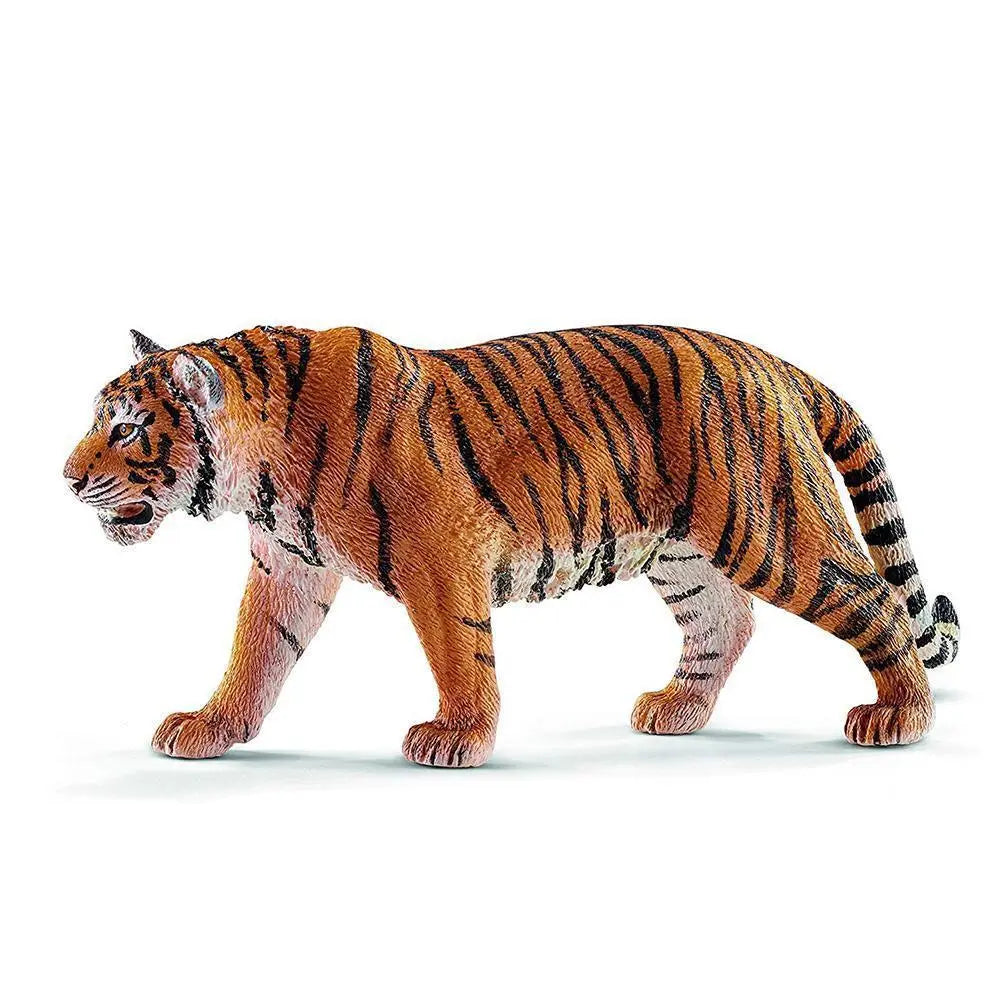
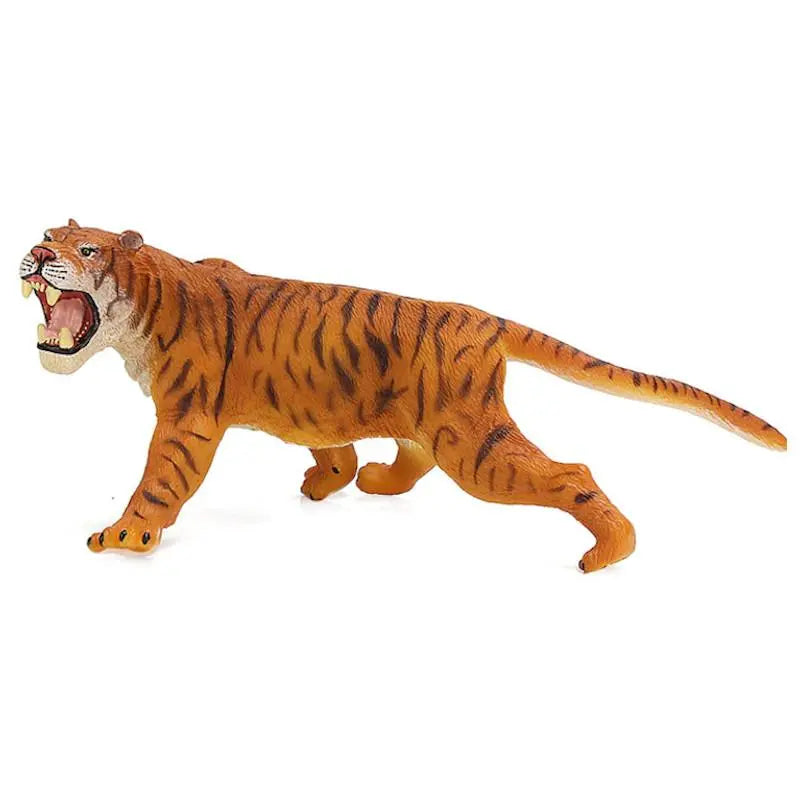
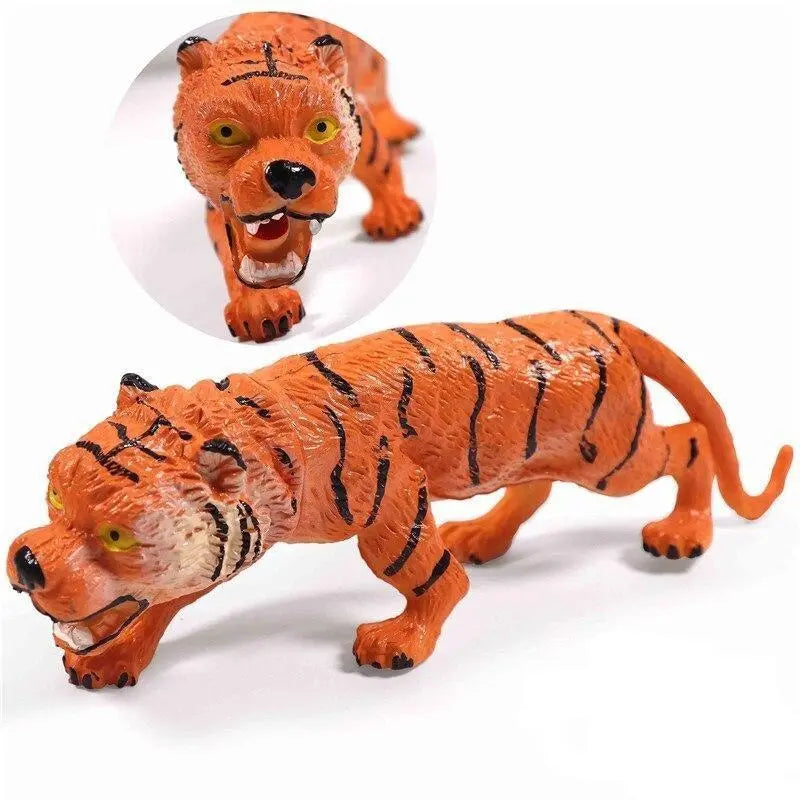
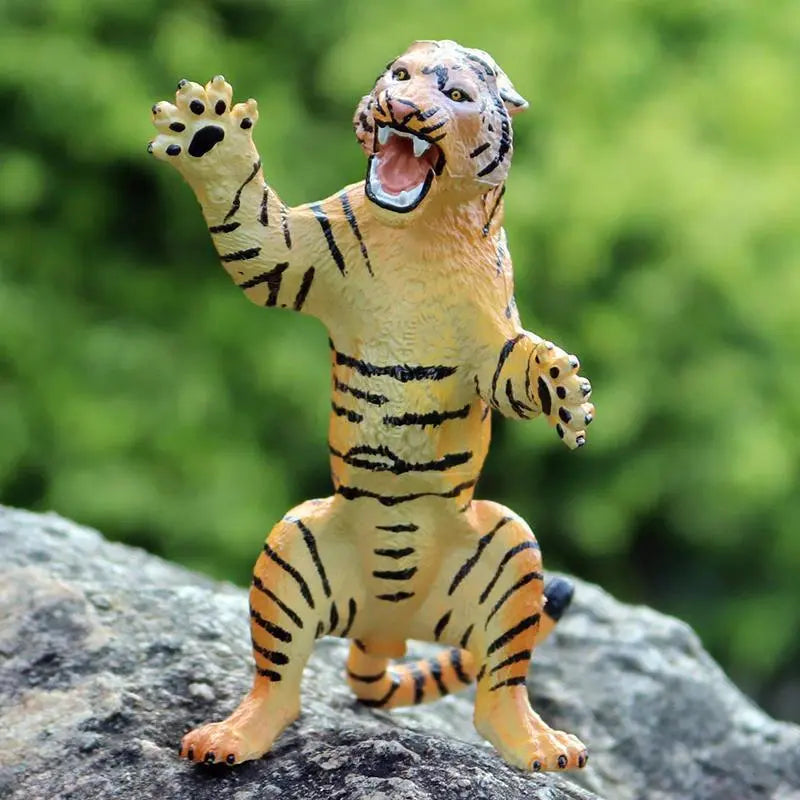
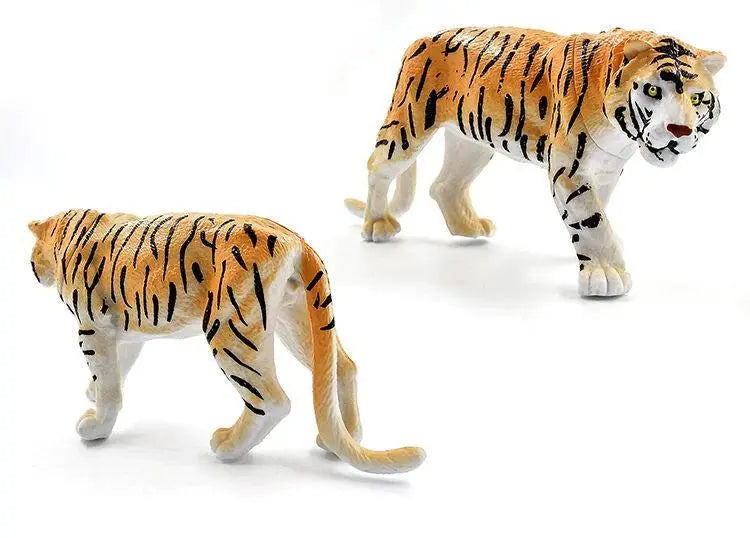
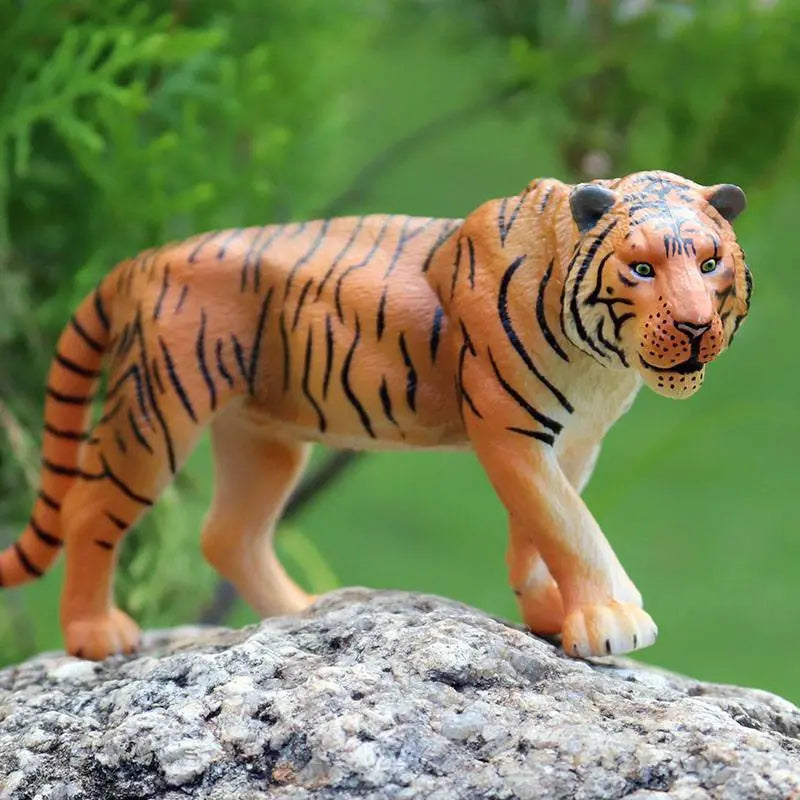
The adult tigers show the animal in all its moods. Tiger Figurine: Fury is the loudest of them, caught mid-roar with its fangs bared, one forepaw swinging forward and its black-tipped tail held high. Others walk at an easy pace with their heads turned toward the viewer, a pose that shows off the white markings around the eyes and muzzle. One tiger rears up on its hind legs, roaring, with both front paws raised and spread wide, another crouches low with blazing yellow eyes and a snarl, and the largest listed size belongs to a tiger in full stride, roaring with its mouth wide open on a pink tongue and long ivory canines.
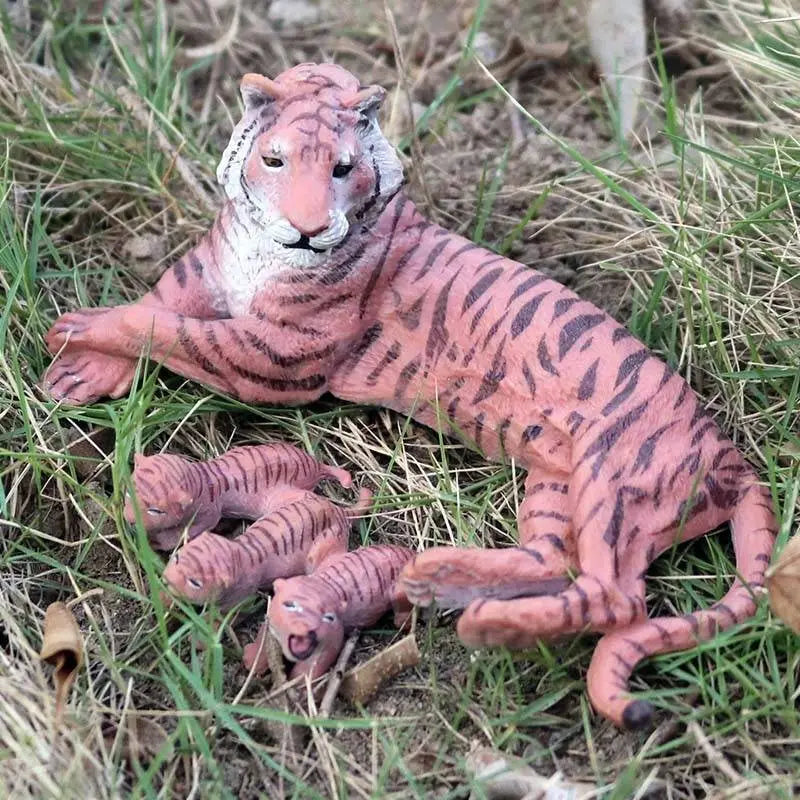
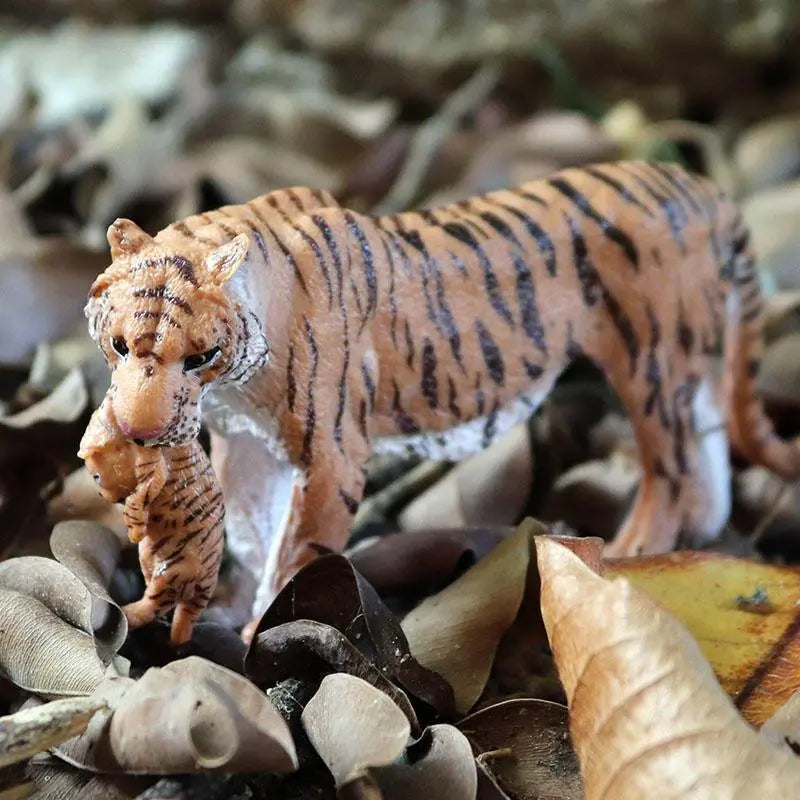
Family scenes are a recurring theme. The Laying Tiger Figurine shows an adult tiger lying at full length, head up and forelegs reaching forward, pictured with three small cubs huddled by its paws, one of them calling with its mouth open. Three is a common litter size for tigers. Elsewhere a tigress on the move carries a cub in her jaws, and a family of white tigers, two adults and two cubs, can be arranged as a group.
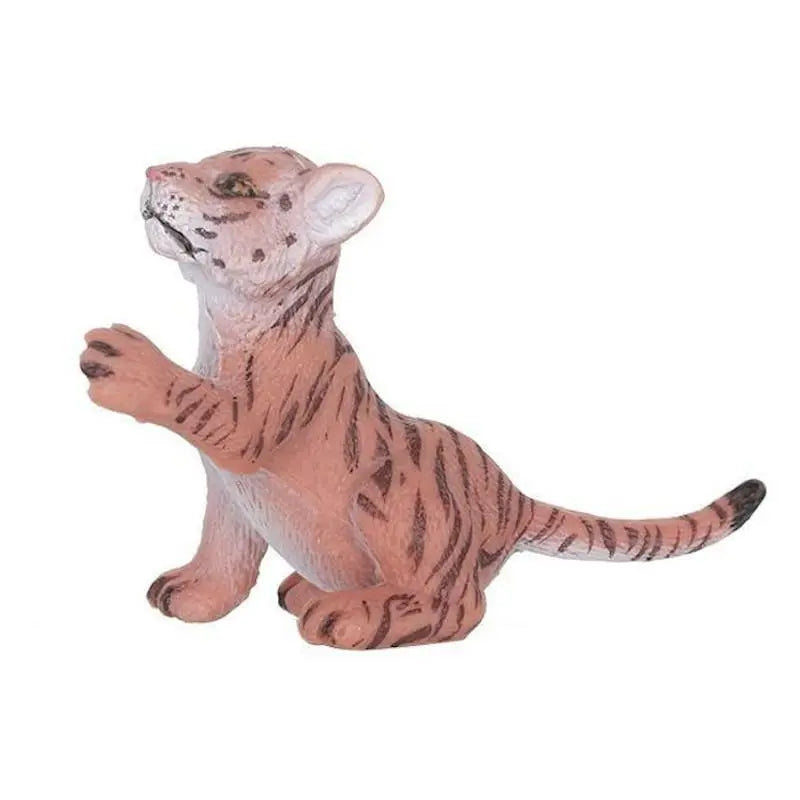
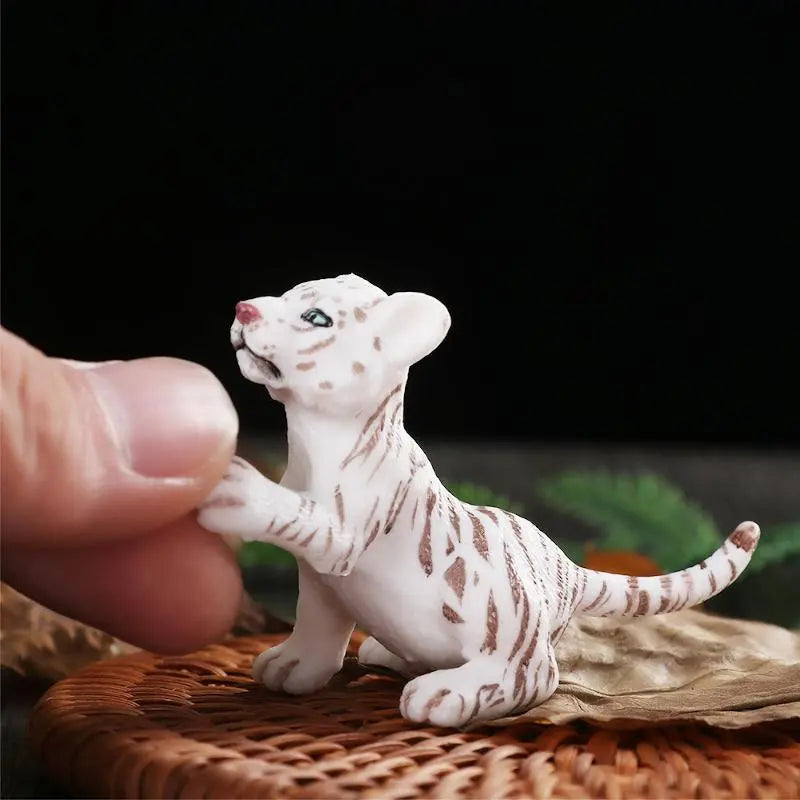
The single cubs are among the smallest pieces in the range. Two stand square on all four legs and two sit up with a forepaw raised, in orange or in white, and the white cubs look out with blue eyes over pink noses.
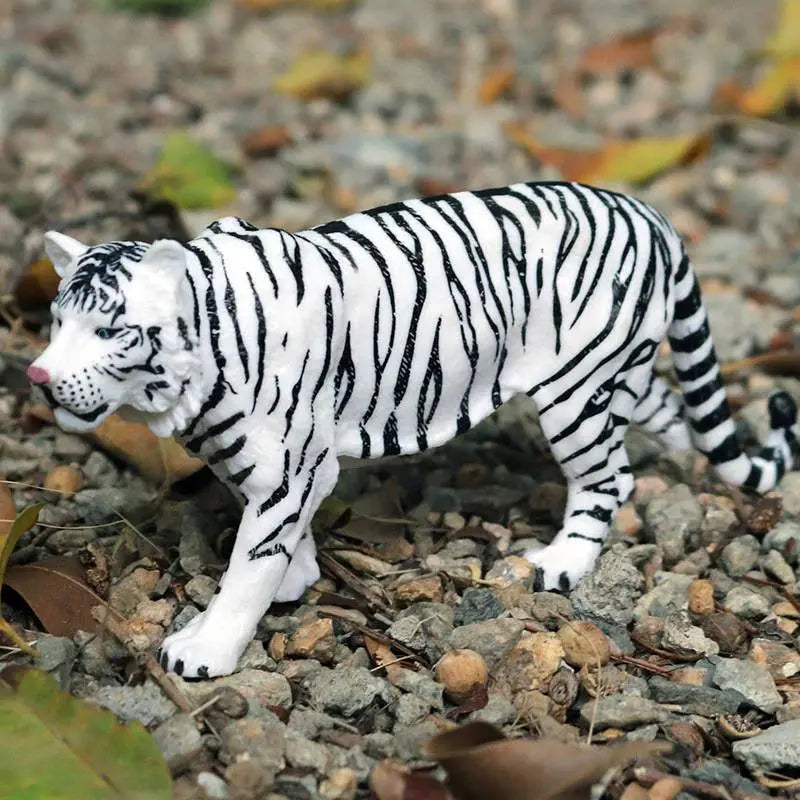
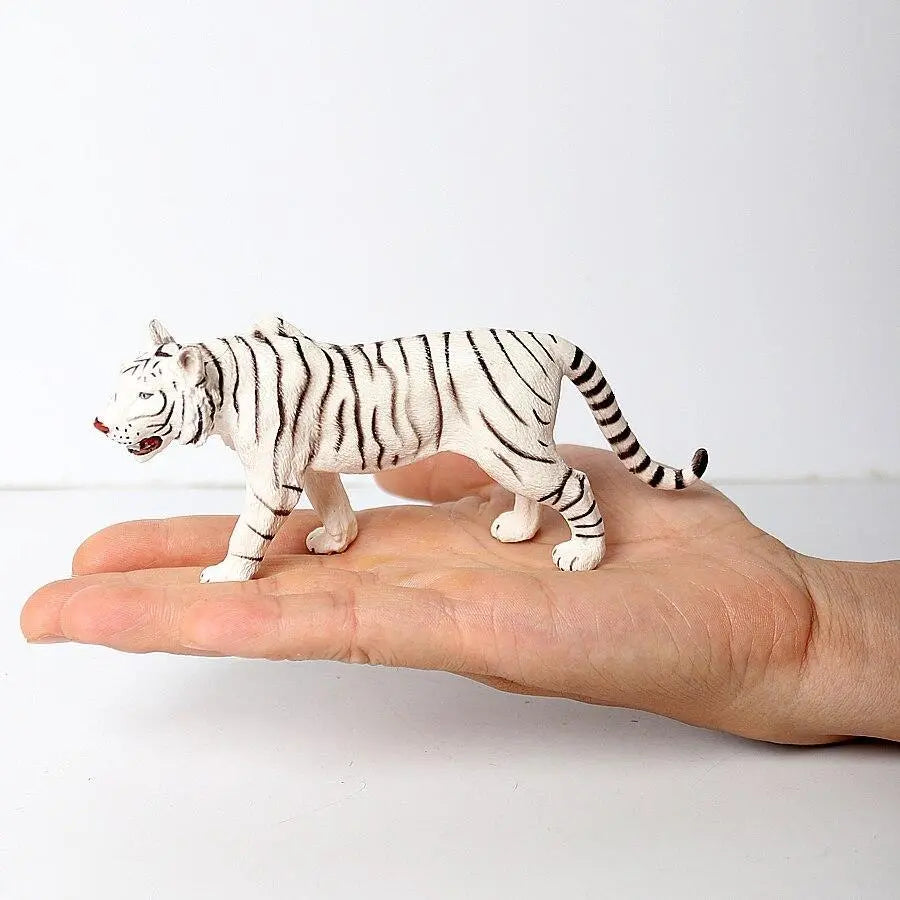
White tigers are well represented. One prowls with its head held low, gazing out with pale blue eyes from a coat crossed by soft brown stripes; another walks with its head turned, its white coat marked with bold black stripes and its tail ringed in black right to the tip. White tigers are not a separate kind of tiger but a color form, recorded mostly among Bengal tigers: a recessive gene strips the orange from the coat but leaves the stripes dark, anywhere from deep brown to black, so both versions here have their counterparts in the animal.
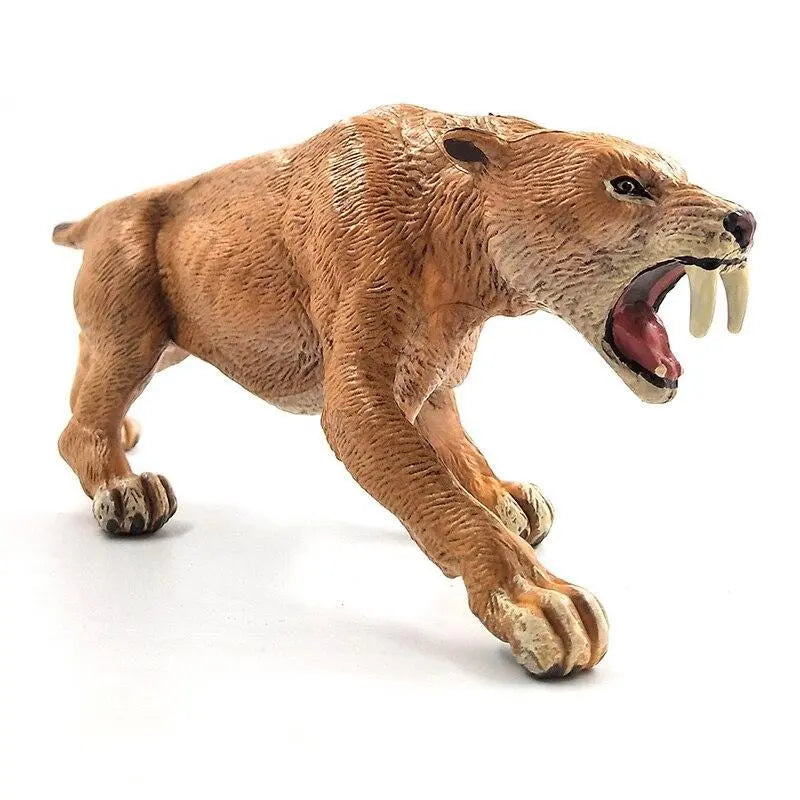
The Sabertooth Tiger Figurine is the outsider of the collection. It lunges forward in a low crouch, jaws gaping around two long, pale upper fangs, with a short tail and a tawny coat that carries no stripes. Smilodon, the best known of the saber-toothed cats, lived in the Americas until the end of the last Ice Age, about 10,000 years ago, and despite the popular nickname it belonged to a separate branch of the cat family from the tiger. Fossils preserve bones rather than fur, so nobody knows the color of its coat, and an unmarked tawny one like this is a common choice in reconstructions. For the full story, our article what is a saber tooth tiger covers the animal's habitat and diet and the evidence that it may have lived in groups.
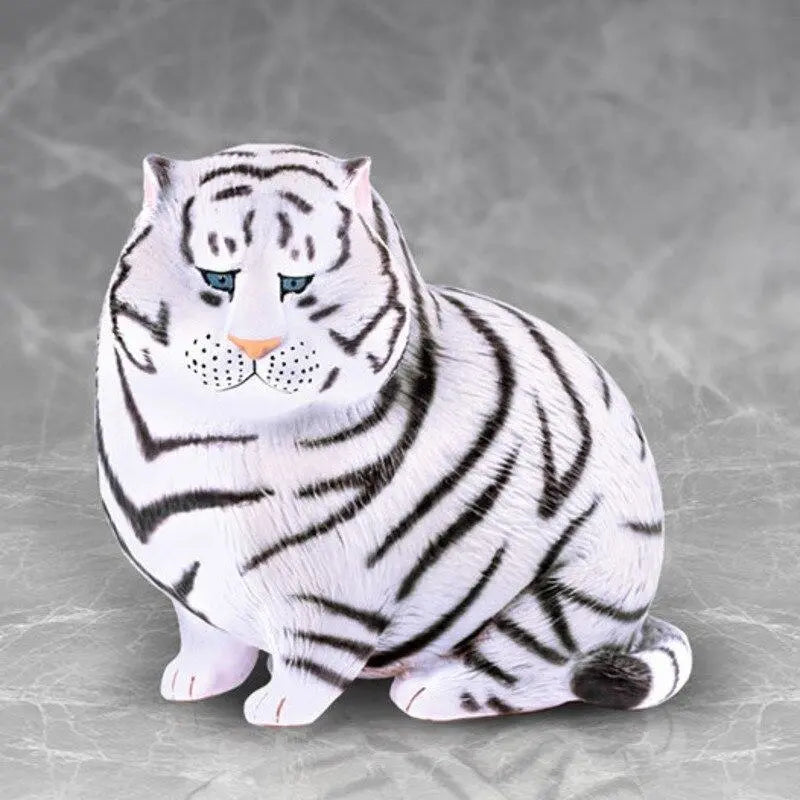
Some pieces lean toward ornament. The Golden Tiger Figurine walks with its head turned to face the viewer, its body finished in glossy orange with black stripes and white paws, and its back covered by a gold-rimmed panel crowded with tiny glittering stones, some gold and some honey-colored. The Big Tiger Figurine goes for character instead: a round, heavy-set tiger sitting square on its haunches, with a white chest, a freckled muzzle and blue eyes under drooping brows that give it a wonderfully gloomy air. It is offered in orange or white.
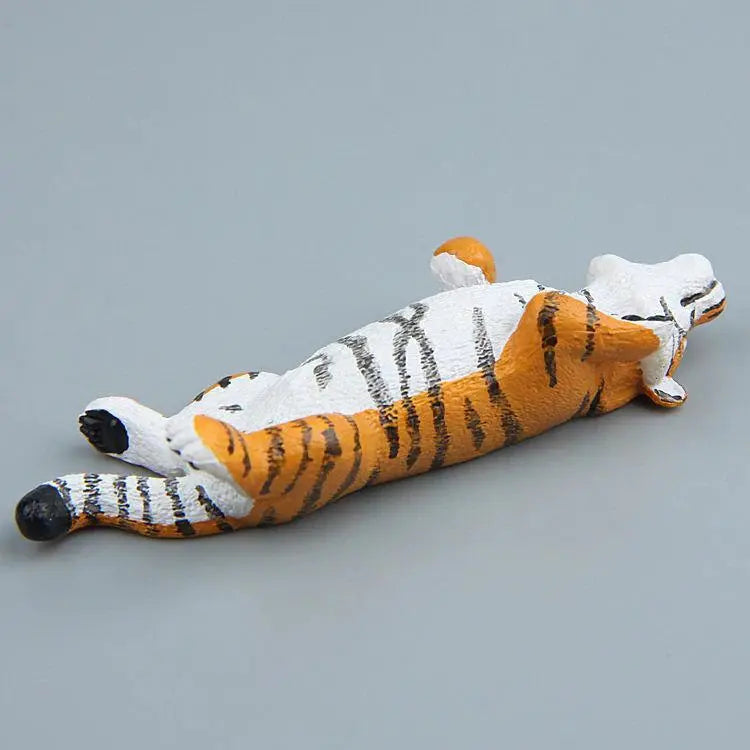
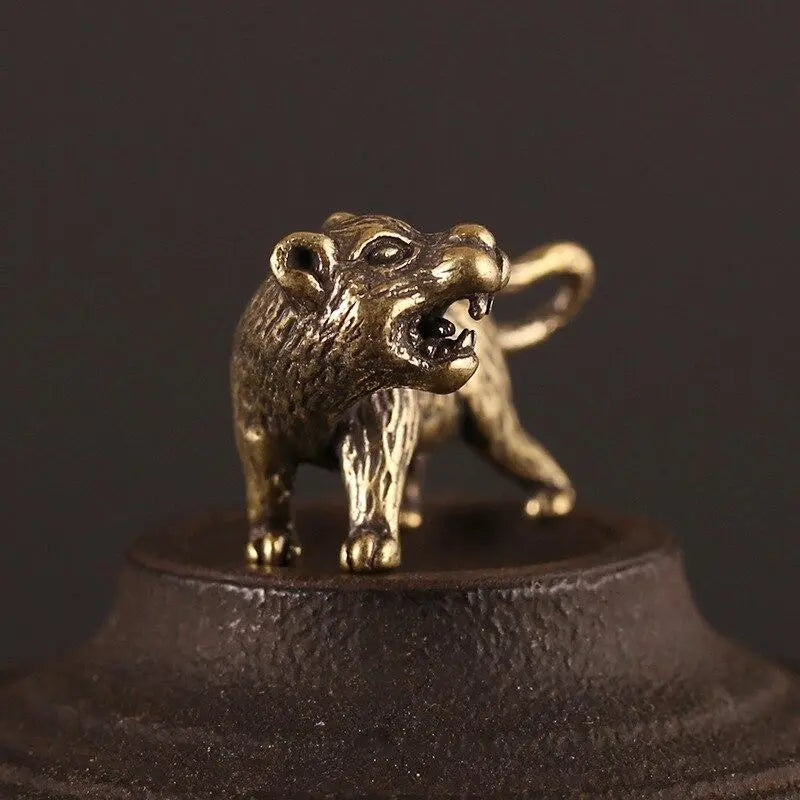
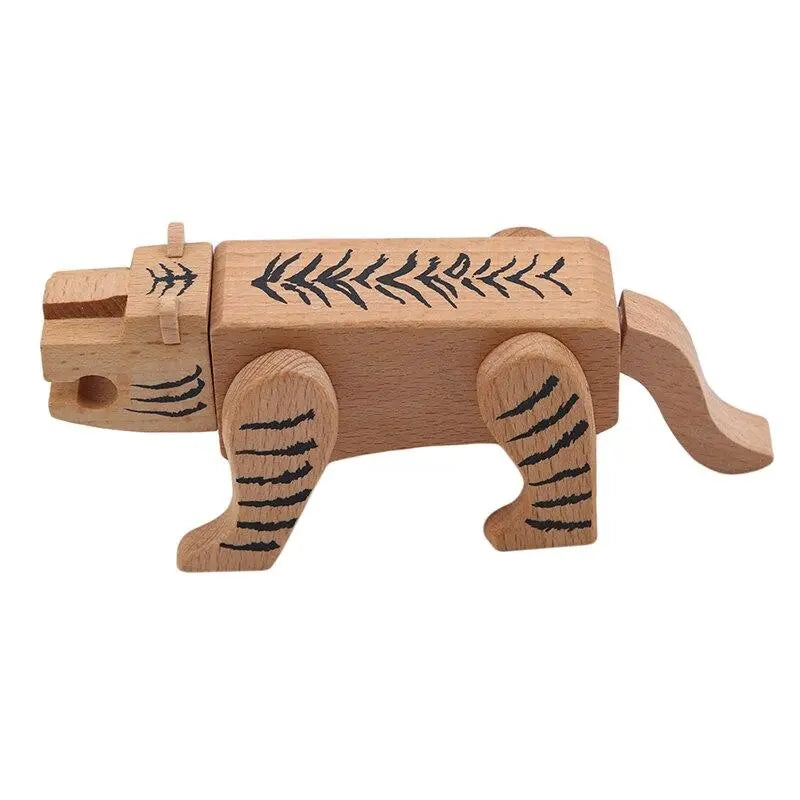
One piece is made from pale, grain-marked wood in chunky blocks, with a square head, a long rectangular body, flat legs and black brushstroke stripes, and it has the charm of a classic wooden toy. A tiny snarling tiger in an antique gold tone, tail curled up behind it, has the smallest listed size of all, and a sleepy cartoon tiger, sprawled flat on its belly with its eyes shut, doubles as a magnet.
Where a size applies, it appears in the figurine's options, and the spread is wide. The cubs are listed at 6.1x4.1cm or 6.5x4cm, small enough to sit in a cupped hand. Most adult tigers fall between 13x3.5x6cm and 15.5x6.1cm, the range of the walking, roaring and resting pieces, with the Laying Tiger Figurine at 13x5.5x8cm and the roaring Tiger Figurine: Fury at 15x6cm. The rearing tiger, upright on its hind legs, comes in at 6x6.5x11cm. At the two extremes of the listed sizes sit the antique gold tiger, just 3.4x1.7x2cm, and the roaring giant at 28x12cm. The Big Tiger Figurine, offered in white or orange, measures 5 cm.
The figurines belong to our wider tiger toy collection, and the lifelike ones work equally well lined up in a display cabinet or pressed into service for an afternoon of make-believe. Soft tigers to cuddle live in the tiger plush range, which holds lifelike and cartoon plush tigers, hand puppets and a tiger-face pillow. A tiger puzzle offers a slower kind of play, turning a painting or a photograph of a tiger into a jigsaw, mostly in the 1000-piece format.
On screen, the most famous tigers are characters in their own right: Shere Khan, the villain of The Jungle Book, Tigger in the Winnie the Pooh films, and Richard Parker, who shares a lifeboat with the hero of Life of Pi. The complete list of movies with tigers on our blog names many more.
Tigers made purely as ornaments have their own home in our tiger statue collection, from Chinese and Japanese tiger statues to a guardian tiger and a tiger head bust made to hang on the wall.
By listed size, the tiny tiger in an antique gold tone, at 3.4x1.7x2cm. Even the cubs are bigger, starting at 6.1x4.1cm.
Only the Big Tiger Figurine, which comes in either white or orange. The others each come in the single color scheme shown in their photos.
The prowling tiger with brown stripes, the walking tiger with black stripes, the family of two adults and two cubs, and the two small white cubs. The round, seated tiger also has a white option.